A Quest for Customization
In 2012 work began on an RPG made in Unity using art exclusively from the Asset Store. The game was published, didn’t do so well, but when has that ever stopped an indie dev from starting a 2nd game?
While we continue to use the quality art from the Asset Store, we wanted art that was customizable. We wanted versatility, and the ability to make the art we license match the game we’re making, not the other way around.
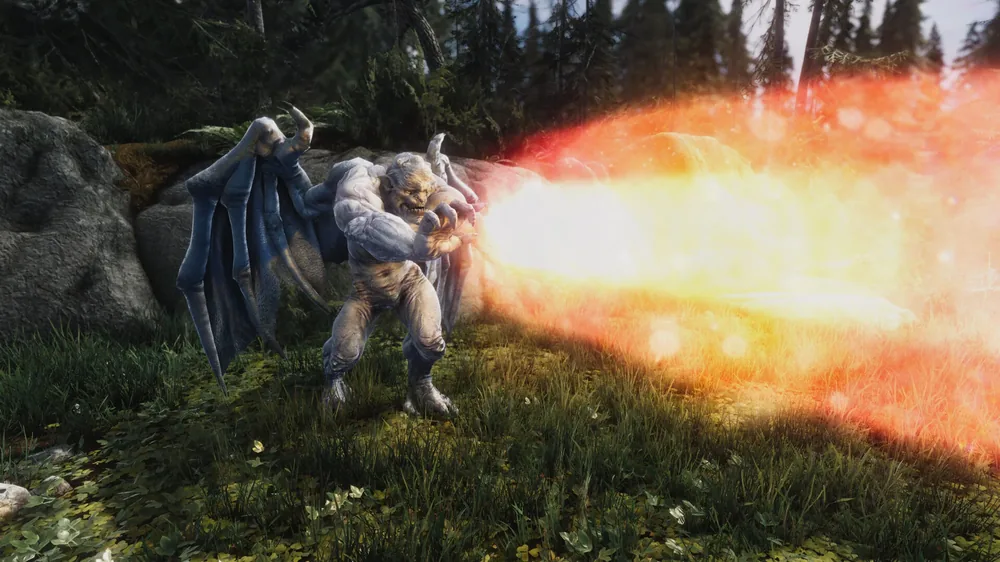
The Infinity PBR of today began in 2015 with the release of the Gargoyles.
Infinity PBR is made by Magic Pig Games. Our Unity Asset Store publisher was called Infinity PBR for years and is now Magic Pig Games, while Infinity PBR remains the name of the series. Magic Pig Games also makes Unity tools such as Game Modules 4, Juicy Actions, Magic Time, Northstar Navigation and Projectile Factory. Explore the high-fidelity series and the low poly series, made to work with Synty Studios’ POLYGON packs.
The people
The monsters, props, characters, environments have been produced by dozens of independent artists from around the world.
A standard creature will be modeled by one artist, and one or two will work on the texturing. An animator will rig and animate, and often also add the mesh morphing. If the creature has sound effects, someone will record that, and for music, a composer will create a new song specifically for the package. Concept artists produce 2D work intended to be used on websites when our users are marketing their game.
Integration with Unity and Unreal is performed by developers focused on that task, plus all of the marketing and tutorial content we produce.
About AI
AI is here, and it’s only going to get more powerful and more widely used by developers. At the time of this writing (September 2026), it’s also very controversial with players, so we want to be upfront about how we use it.
We now use AI when developing our products, but:
- Our tools are made by humans, for humans. AI helps with the code, but the UX, the flow, how a tool works and how it feels to work with it are designed by human developers, for human developers.
- We use human artists whenever practical. Demo scenes are the exception: their content isn’t meant to go into your game, and we do use AI for some of the art there.
- Our main model series have no AI in them at all. As we update the demo scripts, we’ll use AI assistants to help speed up development.
As always, the way it feels to use our products will be human-first and human-made.
What makes our content the best for game devs?
Texture Customization
We expect users will eventually want to customize the textures, to match the aesthetic or content of their project. We now include the Substance Painter source files for most models.
Most of our packs, and all of those produced in the past few years, have been textured using Substance Painter, and there is simply no better way to modify the textures.
Mesh Morphing
Adding variety and versatility to a character or object is key. We include non-animated blend shapes which enables morphing of the mesh itself. This allows you to create any number of more distinct monsters, props, or characters — even randomly at run time.
Our Unity integration includes a helpful Blend Shapes Manager script to make working with mesh morphing quite easy.
Music & Sound Effects
While there are some great sound packs available, we know it’s tremendously helpful to have bespoke audio. We have worked with composer Nathan Clearly to produce custom music, and foley artist Matthew Dear for custom sound effects.
And whenever possible, we produce the audio so that it’s customizable.